Harnessing Embedded Computing for Factory Automation: A Look at Rugged Industrial Solutions
03 June, 2025
Harnessing Embedded Computing for Factory Automation: A Look at Rugged Industrial Solutions
In the fast-evolving landscape of factory automation, embedded computing systems have become indispensable for driving efficiency, precision, and reliability in manufacturing environments. Among the solutions powering this transformation are rugged, compact industrial computers designed to withstand harsh conditions while delivering high-performance processing for a range of automation tasks. These systems, often deployed in smart factories, offer versatile applications, from machine vision to real-time data processing, enabling manufacturers to optimise operations and embrace Industry 4.0. This article explores the capabilities of such embedded computing solutions and how RDS enables their pivotal role in modern factory automation.
The Role of Embedded Computing in Factory Automation
Factory automation relies on advanced control systems to minimise human intervention, enhance productivity, and ensure consistent quality. Embedded computers serve as the backbone of these systems, providing the computational power needed to manage complex processes in real time. Unlike traditional consumer-grade PCs, industrial embedded systems are engineered for durability, with fanless designs, wide operating temperature ranges, and resistance to dust, vibration, and shock. These features make them ideal for the demanding conditions of factory floors, where equipment must operate reliably amidst extreme temperatures, electrical noise, and mechanical stresses. The systems built by RDS are designed for the harshest environments, 24 hour operation and with enough power to drive industry.
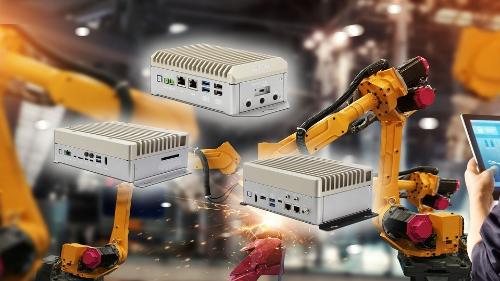
In automation, these systems perform critical functions such as controlling robotic arms, monitoring production lines, and analysing sensor data. Their compact form factors allow seamless integration into space-constrained environments, while their robust connectivity options—supporting protocols like EtherCAT, PROFINET, and CANBus—enable communication with legacy and modern industrial equipment. By consolidating workloads like data acquisition, motion control, and human-machine interfaces (HMIs), these computers streamline operations and reduce hardware footprints, making them a cornerstone of smart manufacturing. RDS can design complete bespoke or off the shelf systems designed to meet specific customer requirements.
Key Features for Factory Automation
Embedded industrial computers are tailored to meet the unique challenges of factory automation. Their key features include:
- Rugged Design: Built to endure harsh environments, these systems often feature fanless cooling to eliminate moving parts, reducing maintenance needs and preventing dust ingress. They typically comply with standards like MIL-STD-810G for shock and vibration resistance and offer IP-rated enclosures for protection against water and contaminants.
- High-Performance Processing: Equipped with powerful processors, such as Intel Core or NVIDIA Jetson for edge AI applications, these systems handle compute-intensive tasks like machine vision, deep learning, and real-time analytics. Support for GPU acceleration enables advanced image processing for quality control and defect detection.
- Versatile Connectivity: With multiple I/O ports, including USB, HDMI, COM, and industrial Ethernet, these computers integrate seamlessly with sensors, actuators, and PLCs. Wireless options like Wi-Fi, 4G/LTE, and Bluetooth ensure connectivity in noisy factory environments, facilitating cloud integration and remote monitoring.
- Scalability and Customisation: Modular designs allow for expansion via PCIe slots, M.2 modules, or iDoor technology, supporting additional storage, communication interfaces, or specialised I/O. This flexibility ensures compatibility with diverse automation applications, from small-scale deployments to large, interconnected systems.
- Wide Temperature and Power Range: Operating reliably in temperatures from -25°C to +70°C and supporting wide input voltage ranges (e.g., 9-36V), these systems are suited for unconditioned environments like outdoor installations or unheated warehouses.
These attributes make embedded computers versatile tools for automating processes across key markets for RDS such as; automotive, food and beverage, pharmaceuticals, and electronics manufacturing.
Applications in Factory Automation
The versatility of rugged embedded computers enables a wide range of applications in factory automation, each contributing to operational efficiency and data-driven decision-making. Below are some key use cases:
Machine Vision and Quality Control
Machine vision systems, powered by embedded computers with GPU support, are transforming quality control on production lines. These systems process high-resolution images in real time to detect defects, verify dimensions, or read barcodes. For example, in automotive manufacturing, embedded computers analyse components for surface imperfections, ensuring parts meet strict tolerances. Their ability to run deep learning models at the edge allows for immediate defect identification, reducing waste and improving product consistency. RDS can also supply and build complete camera solutions connected via standard interfaces.
Robotic Control and Motion Systems
Industrial robots, such as 6-axis robotic arms used for welding or assembly, rely on embedded computers for precise motion control. These systems process sensor inputs and execute complex algorithms to coordinate movements, ensuring accuracy in repetitive tasks. In flexible automation setups, where robots handle multiple product variants, the computers’ reprogramming capabilities minimise changeover times, boosting throughput in industries like electronics assembly. RDS can design and build motion control systems using precision motors and controllers for a whole host of industrial applications.
Real-Time Data Acquisition and Monitoring
Embedded computers collect and process data from sensors monitoring parameters like temperature, pressure, or vibration. In a food processing plant, for instance, they ensure compliance with safety standards by tracking environmental conditions and triggering alerts for deviations. Integration with SCADA systems allows supervisors to monitor processes remotely, while edge computing capabilities enable local data analysis, reducing latency and cloud dependency. RDS also has a range of industrial tablets and mobile solutions that are idea for hostile environments with hot swap batteries, high bright screens and tough cases.
Human-Machine Interfaces (HMIs)
HMIs powered by embedded computers provide intuitive touchscreens for operators to interact with machinery. These interfaces display real-time performance metrics, issue commands, or troubleshoot issues. In pharmaceutical manufacturing, HMIs ensure precise control over batch processes, maintaining compliance with regulatory standards. The computers’ compact designs allow HMIs to be mounted directly on production lines, enhancing accessibility. RDS has a huge range of custom and standard display systems, so whatever type of display or HMI you need, RDS can build it.
Predictive Maintenance and IIoT Integration
By leveraging the Industrial Internet of Things (IIoT), embedded computers enable predictive maintenance, analysing sensor data to predict equipment failures before they occur. For example, in a steel mill, vibration sensors connected to an embedded system can detect anomalies in machinery, scheduling maintenance to prevent costly downtime. Their support for cloud connectivity allows data to be shared with enterprise systems, facilitating large-scale analytics and process optimisation.
Automated Guided Vehicles (AGVs)
In warehouses and factories, AGVs rely on embedded computers for navigation, obstacle detection, and task coordination. These systems process inputs from LiDAR, cameras, and ultrasonic sensors to guide vehicles along dynamic paths, optimising material handling. Their rugged designs ensure reliability in dusty or humid environments, while low-power processors extend battery life for continuous operation.
Benefits for Smart Factories
The adoption of embedded industrial computers in factory automation aligns with the principles of Industry 4.0, delivering measurable benefits:

- Increased Efficiency: By automating repetitive tasks and optimising workflows, these systems boost production rates and reduce cycle times. For instance, flexible automation enabled by programmable computers allows manufacturers to produce small batches of customised products without sacrificing speed.
- Enhanced Safety: Automation reduces human exposure to hazardous tasks, such as handling heavy loads or operating in high-temperature environments. Safety features like emergency stop integration and real-time monitoring further protect workers.
- Cost Savings: Lower labour costs, reduced error rates, and predictive maintenance minimise operational expenses. Fanless designs and long lifespans (often 7-10 years) reduce maintenance and replacement costs.
- Data-Driven Insights: Real-time analytics and IIoT integration provide actionable insights into production performance, enabling continuous improvement. For example, digital twins—virtual replicas of physical assets—rely on embedded computers to simulate and optimise processes.
- Scalability: Modular systems support future upgrades, allowing manufacturers to incorporate new technologies like 5G or advanced AI without overhauling existing infrastructure.
- RDS also uses it’s SenConnect software suit for command and control systems for lighting, heating, and sense and control applications.
Challenges and Considerations
While embedded computers offer significant advantages, their implementation requires careful planning. High initial costs can be a barrier, particularly for small manufacturers, though long-term savings often justify the investment. Selecting the right system involves assessing environmental conditions, processing requirements, and compatibility with existing equipment. Additionally, cybersecurity is critical, as IIoT-connected devices are vulnerable to attacks. Trusted platform modules (TPMs) and secure boot features help mitigate risks, but ongoing software updates and network monitoring are essential.
Skilled personnel are also needed to program and maintain these systems, especially for complex applications like flexible automation or AI-driven vision. Manufacturers must invest in training or partner with integrators to ensure successful deployment. Finally, while automation enhances efficiency, it may displace low-skill jobs, requiring workforce reskilling to focus on supervisory or technical roles.
The Future of Embedded Computing in Automation
As factory automation evolves, embedded computers will play an increasingly central role. Advances in edge AI will enable more sophisticated on-device processing, reducing reliance on cloud infrastructure and enhancing real-time decision-making. The adoption of 5G and Time-Sensitive Networking (TSN) will improve connectivity, supporting seamless communication in large-scale smart factories. Additionally, smaller form factors and energy-efficient processors will expand deployment possibilities, from compact IoT gateways to mobile robotic platforms. Advanced AI solutions based on industrial computers is going to be the way forward for many, RDS can supply hardware and software solutions for AI based application, including private AI servers, vision and much more.
Sustainability is another emerging focus, with embedded systems optimising energy usage and reducing waste through precise control. For example, smart inverters and variable-frequency drives managed by these computers can lower power consumption in motors, aligning with green manufacturing goals. As digital transformation accelerates, these solutions will continue to drive the convergence of IT and operational technology (OT), creating fully integrated, intelligent production systems.
Conclusion
Rugged embedded industrial computers are transforming factory automation by providing reliable, high-performance solutions for diverse applications. From machine vision to predictive maintenance, their ability to operate in harsh environments while delivering real-time processing and connectivity makes them essential for smart factories. By enhancing efficiency, safety, and scalability, these systems empower manufacturers to meet the demands of Industry 4.0 and beyond. As technology advances, their role will only grow, paving the way for more intelligent, sustainable, and flexible manufacturing processes. For businesses looking to modernise, investing in these robust computing solutions is a strategic step toward a competitive, automated future. RDS is at the forefront of system developments, with our global footprint, manufacturing expertise and both hardware and software expertise, we can solve your automation prolems.
Give us a call on 01959 563 345.