Choosing Between AI SoCs and AI Accelerators: A Practical Perspective
10 November, 2025
Choosing Between AI SoCs and AI Accelerators: A Practical PerspectiveBy Daniel Burke, Marketing Manager at RDS
Following a recent discussion on the evolving landscape of AI hardware, I’ve received a number of insightful questions—particularly around the trade-offs between AI SoCs and standalone AI accelerators. At RDS, we work closely with customers across industries to design and deliver AI-powered systems, so I’d like to offer a practical perspective grounded in real-world deployment.
When selecting the right AI solution for your next project, the decision often comes down to your specific use case and performance requirements. AI SoCs—System-on-Chips with integrated AI capabilities—offer a compelling balance of compute power and integration. These typically feature dual, quad, or octa-core Cortex-A CPUs alongside embedded NPUs, making them ideal for compact, power-efficient designs.
Some standout examples include:
- SoCs delivering 2–5 TOPS for entry-level vision tasks
- Mid-range options offering 15–30 TOPS for more demanding inference
- High-performance SoCs pushing 100+ TOPS for edge AI applications
These platforms vary widely in architecture, scalability, and software ecosystem maturity. Understanding your workload—whether it’s real-time video analytics, object detection, or multi-sensor fusion—can help narrow down the optimal choice.
Alternatively, a more modular and scalable approach is to start with a general-purpose SoC or a low-end AI SoC and pair it with an external AI accelerator. This strategy is especially effective when the base SoC includes PCIe Gen3 support (ideally 4-lane, minimum 2-lane), allowing seamless integration of an accelerator when higher inference performance is needed.
This design philosophy enables you to launch with a cost-optimised bill of materials (BOM) and scale up as your application evolves—without redesigning your baseboard. You can leave the accelerator unpopulated at first, and simply add it later to unlock significantly higher TOPS.
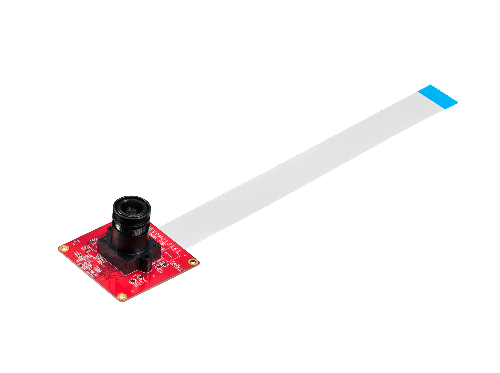
At RDS, we support this flexible architecture with a comprehensive range of embedded AI cameras and vision systems, all built on robust, industrial-grade components. Our portfolio includes:
- Compact smart cameras for edge AI inference
- High-resolution industrial cameras for machine vision
- Modular camera kits with scalable AI compute options
- Customisable vision platforms for OEM integration
Whether you’re building a smart kiosk, an industrial inspection system, or an autonomous device, RDS offers a tailored solution to meet your performance, form factor, and environmental requirements.
Stay tuned—some exciting new product announcements are just around the corner.