The Critical Role of Vibration and Heat-Tolerant Systems in Military and Industrial Applications
01 August, 2025
The Critical Role of Vibration and Heat-Tolerant Systems in Military and Industrial Applications
In the demanding environments of military and industrial operations, where extreme conditions are the norm, the reliability of electronic systems is paramount. From rugged terrains to high-temperature factories, equipment must withstand intense vibrations, shocks, and thermal stresses while maintaining optimal performance. Vibration and heat-tolerant systems, including embedded boards, robust computer systems, and specialised displays, are essential for ensuring operational success in these challenging settings. These technologies are engineered to endure harsh conditions, delivering durability, stability, and longevity for mission-critical applications.
The Need for Vibration and Heat Tolerance
Military and industrial environments present unique challenges that standard commercial electronics cannot handle. In military applications, such as combat vehicles or aircraft, systems are exposed to constant vibrations from rough terrain or high-speed manoeuvres, as well as extreme temperatures ranging from freezing cold to scorching heat. Similarly, industrial settings like mining operations, oil and gas facilities, or manufacturing plants involve heavy machinery, dust, humidity, and temperature fluctuations that can compromise standard electronics. Vibrations, which account for nearly half of electronic failures, and heat, which can cause overheating and performance throttling, are among the leading causes of system breakdowns. To address these challenges, specialised components are designed to meet stringent standards, ensuring reliability in the face of environmental stressors.
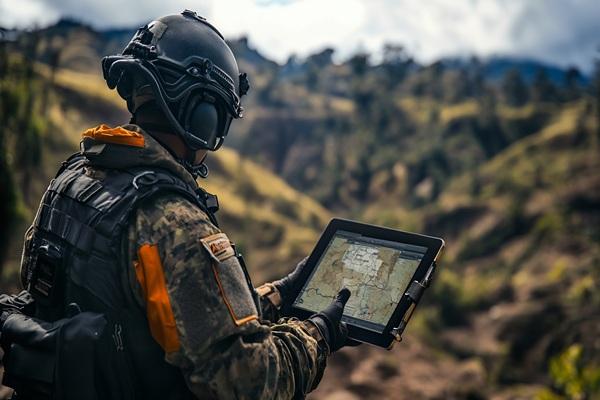
A soldier using a tablet for navigation in a rugged outdoor environment.
Embedded Boards: The Backbone of Rugged Computing
Embedded boards are the foundation of many military and industrial computing systems, providing the processing power and connectivity needed for complex operations. These boards are designed with specific features to thrive in harsh conditions:
- Fanless Design and Passive Cooling: By eliminating moving parts like fans, embedded boards reduce the risk of mechanical failure while efficiently dissipating heat through advanced heatsink designs. This ensures stable operation in temperatures ranging from -40°C to 85°C, critical for applications in deserts, arctic environments, or high-temperature industrial settings.
- Vibration and Shock Resistance: Certified to standards like MIL-STD-810G for military use and IEC60068-2-64 for industrial applications, these boards are tested to withstand vibrations up to 2.5Grms (1Hz to 300Hz) and shocks from heavy machinery or explosive impacts. This durability is vital for applications like vehicle-mounted systems or underground mining equipment.
- Compact and Robust Construction: Built with extruded heavy-duty metal enclosures, embedded boards offer a single-mold chassis that minimises joints and gaps, preventing dust ingress and enhancing structural integrity. This design also doubles as a heatsink, further improving thermal management.
- Wide Power Input Range: To accommodate unstable power sources in field operations, these boards support wide voltage inputs (e.g., 9V to 36V), ensuring consistent performance in fluctuating conditions.
These specifications enable embedded boards to power mission-critical systems, such as real-time navigation in military vehicles or automated control in industrial machinery, without succumbing to environmental stressors.
Robust Computer Systems: Reliability Under Pressure
Robust computer systems build on the capabilities of embedded boards, integrating them into complete solutions tailored for extreme environments. These systems are engineered to deliver high performance while maintaining stability in the face of vibrations, heat, and other challenges:
- Thermal Management: Incorporating fanless conduction cooling and high-efficiency thermal conductive materials, these systems prevent overheating by dissipating heat from critical components like CPUs. This is crucial for maintaining performance in high-temperature environments, such as engine compartments or factory floors, where temperatures can exceed 70°C.
- Rugged Enclosures: Constructed with heavy-duty materials, these systems are sealed to IP65 or higher ratings, offering protection against dust, moisture, and salinity. This makes them ideal for coastal industrial sites or military operations in humid environments.
- Vibration and Shock Testing: Rigorously tested to simulate real-world conditions, these systems endure random vibration tests that mimic the dynamic stresses of combat situations or heavy machinery. Certifications like MIL-STD-202G ensure they can handle intense vibrations encountered in field deployments.
- Modular and Scalable Design: With support for advanced processors, multiple I/O ports, and expansion options, these systems can be customised for diverse applications, from surveillance and reconnaissance to industrial automation.
These features make robust computer systems indispensable for applications requiring uninterrupted operation, such as military command centres, autonomous drones, or industrial IoT ecosystems.
Vibration and Heat-Resistant Displays: Clarity in Harsh Conditions
Displays are a critical interface in military and industrial applications, providing operators with real-time data for decision-making. Vibration and heat-resistant displays are designed to deliver clear visuals and reliable performance under extreme conditions:
- High Brightness and Durability: With brightness levels up to 2,000 nits, these displays ensure readability in direct sunlight, essential for outdoor military operations or industrial sites. They are built with ruggedized glass and reinforced frames to withstand shocks and vibrations, maintaining functionality during high-intensity scenarios.
- Wide Temperature Range: Capable of operating in temperatures from -40°C to 70°C, these displays resist thermal stress, preventing issues like screen fogging or pixel degradation. This is vital for applications in extreme climates, such as desert-based military missions or arctic industrial operations.
- IP-Rated Enclosures: Sealed to IP65 or higher, these displays protect against dust, water, and corrosive elements, making them suitable for harsh environments like oil rigs or naval vessels.
- Anti-Vibration Mounting: Specialised mounting systems absorb shocks and vibrations, ensuring the display remains stable and operational during turbulent conditions, such as in combat vehicles or heavy machinery cabs.
These displays provide operators with reliable access to critical information, whether monitoring battlefield data or overseeing industrial processes, without compromising performance.

Building Class-Leading Technology Solutions
The integration of these vibration and heat-tolerant components—embedded boards, robust computer systems, and specialised displays—enables the creation of class-leading technology solutions for military and industrial applications. A key player in this space leverages these components to deliver customised systems that meet the unique demands of their clients:
- Military Applications: By combining high-performance embedded boards with rugged computer systems and durable displays, tailored solutions are deployed in mission-critical scenarios. For example, vehicle-mounted systems for navigation and communication in combat zones rely on vibration-resistant boards and displays that withstand shocks from rough terrain or explosions. These systems are tested to military standards, ensuring reliability in electronic warfare, surveillance, and reconnaissance.
- Industrial Applications: In industries like mining, oil and gas, or manufacturing, solutions integrate fanless computing systems with high-brightness displays to monitor and control operations in real time. These systems endure constant vibrations from heavy machinery and high temperatures from processing environments, reducing downtime and maintenance costs.
- Customisation and Integration: The ability to customise these components allows for solutions that address specific environmental and operational challenges. For instance, modular designs enable the integration of advanced sensors, wireless connectivity, and AI capabilities, supporting applications like autonomous vehicles or smart factories.
- Reliability and Longevity: By using components tested for mean time between failures (MTBF) and certified to international standards, these solutions offer extended lifespans, reducing the need for frequent replacements and ensuring cost-effectiveness.
Conclusion
Vibration and heat-tolerant systems are the cornerstone of reliable performance in military and industrial applications. Embedded boards with fanless designs and robust enclosures, computer systems with advanced thermal management, and displays built for extreme conditions provide the durability and stability needed to operate in the harshest environments. By integrating these components, cutting-edge technology solutions are crafted to meet the rigorous demands of mission-critical operations, ensuring seamless performance, enhanced safety, and operational efficiency. As industries and militaries continue to push the boundaries of technology, the importance of these resilient systems will only grow, driving innovation and reliability in the most challenging settings.
Get in touch with RDS to discuss your next project 01959 563 345