Custom Medical displays
Custom Medical display solutions
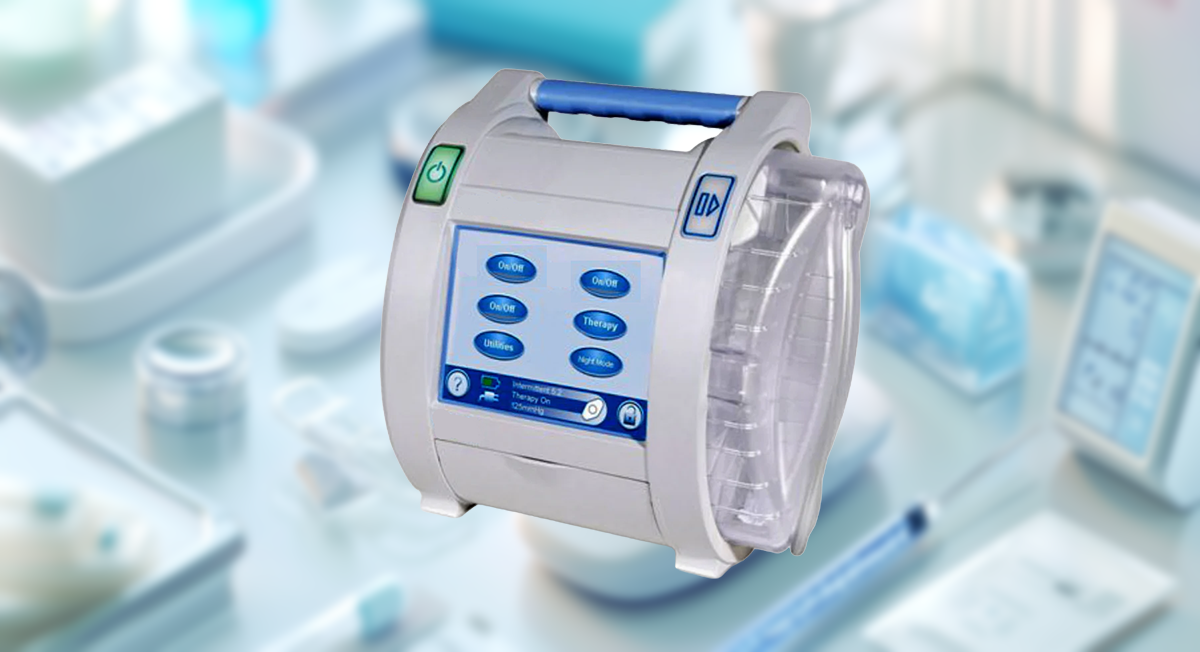
OverviewRDS partnered with a healthcare engineering company to design and produce a portable Negative Pressure Wound Therapy (NPWT) unit deisgned to speed up the healing process. For a device used in both high-stress hospital environments and home-care settings, the display is not just a screen—it is a safety-critical component. The pump must provide real-time data on pressure levels, battery life, and "Seal Check" alerts to ensure the vacuum hasn't been breached. RDS (Review Display Systems) was tasked with designing and building a custom display subsystem that could handle these rigorous demands. The engineering challenge focused on three pillars: readability, reliability, and integration.
Challenge & Objectives
The customer required a display solution that could:
- High contrast optics: Because these pumps are used in various lighting conditions—from dimly lit hospital rooms to bright outdoor environments for mobile patients—RDS implemented high-brightness, wide-viewing-angle panels.
- Ruggedization: Medical devices undergo frequent cleaning with harsh chemical disinfectants. RDS engineered the subsystem with specialized overlays and bonding techniques to ensure the display remained optically clear and responsive even after years of chemical exposure.
- The "Seal Check" Visualizer: RDS designed the display to render complex pressure data into simple, actionable animations that help clinicians quickly locate air leaks.
- Power Optimization: The RDS display subsystem had to be extremely power-efficient to maximize the device's 14-hour battery life.
- Incorporate a 4.7" projected capacitive (PCAP) touchscreen
- Include IP-rated human interface devices (HID) suitable for harsh environments
- Remain lightweight and portable without compromising ruggedness
The solution needed to balance performance, durability and portability, while meeting stringent medical demands.
Design & Development
RDS engineered a fully industrialised subsystem based on the customers exact specifications. The design process focused on precisie integration, robustness, quality and long term supply.
Key elements of the design included:
- 4,7" PCAP touchscreen for intuitive, high visibility control with custom connections
- Robust support metalwork
- IP-rated HID devices for reliable operation in medical environments
- Robust but light construction to reduce weight while maintaining strength
- Compact, portable form factor optimised for deployment flexibility
- Custom with cover glass
Materials, thermal management and mechanical design were carefully considered to deliver a perfect solution, without unnecessary size or weight penalties.
Production & Deployment
RDS delivered functional prototypes in under 12 weeks from the initial engagement. An iterative design approach enabled rapid refinement, ensuring the sub assembly was optimised for manufacturability and scalability. This allowed the customer to move quickly from prototype to production readiness.
Outcome & Impact
The rapid transition from concept to production enabled the customer to be quick to market in a highly competitive medical market. The successful deployment of the sub assembly helped secure large-volume orders and positioned the customer strongly within the medical sector.
Key Takeaways
- Portable, rugged all-in-one subassembly
- 4.7" PCAP touchscreen with custom cover glass
- Integration of proprietary safety and control systems
- Lightweight construction for improved portability
- Rapid prototyping and scalable production capability
RDS delivers end-to-end hardware design and manufacturing solutions for medical applications, supporting customers from early concept through to volume production.