Revolutionising Smart Displays: Why Engineers Adore the ESP32
24 October, 2025
Revolutionising Smart Displays in Review Display Systems’ Industrial and Medical Solutions
In the fast-evolving world of smart industrial and medical displays, Review Display Systems stands out by integrating the versatile ESP32 microprocessor into our cutting-edge products. This powerhouse chip from has become a favourite among engineers for its blend of performance, affordability, and flexibility. Whether powering real-time monitoring in factories or intuitive interfaces in medical devices, the ESP32 enables seamless, reliable operation in demanding environments. Let’s dive into why engineers can’t get enough of it—and how Review Display Systems leverages it in their integrated development boards.
Dual-Core Powerhouse with Built-in Connectivity
At the heart of the ESP32 is its dual-core Xtensa LX6 processor, clocking in at up to 240 MHz, which delivers robust multitasking capabilities. But what truly sets it apart is the integration of Wi-Fi (802.11 b/g/n) and Bluetooth (both classic and BLE) into a single chip. This all-in-one design eliminates the need for additional modules, making it ideal for machines that require wireless control, remote monitoring, or over-the-air (OTA) firmware updates.
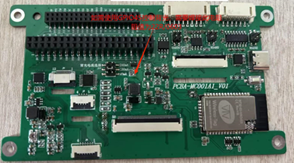
Engineers love this for industrial applications like predictive maintenance systems, where devices can stream data to the cloud without cumbersome wiring. In medical displays, it facilitates secure, low-latency connections for patient monitoring or telemedicine interfaces. No extra hardware means simpler designs, lower costs, and fewer points of failure—music to any engineer’s ears.
Low Cost Meets High Performance
One of the ESP32’s biggest draws is its unbeatable price-to-performance ratio. Compared to pricier industrial-grade microcontrollers, the ESP32 is remarkably affordable while handling heavy workloads like sensor fusion, real-time data processing, and even edge AI tasks. With up to 520 KB of SRAM and support for external flash, it can run complex algorithms without breaking a sweat.
For Review Display Systems’ smart displays, this translates to cost-effective solutions that don’t compromise on capability. Engineers appreciate how it powers sophisticated features—such as analysing sensor inputs from machinery or rendering high-resolution medical imaging—without inflating budgets. It’s a game-changer for scaling prototypes to production in resource-constrained industries.
Abundant I/O and Peripherals for Seamless Integration
The ESP32 boasts an impressive array of interfaces: over 30 GPIOs, multiple ADCs and DACs, SPI, I²C, UART, PWM channels, and even Ethernet MAC support. This rich peripheral set allows direct communication with industrial sensors, actuators, and communication buses like CAN or Modbus. In medical and industrial contexts, this means effortless integration with thermocouples, pressure sensors, or haptic feedback systems. Engineers rave about the flexibility—it reduces the need for intermediary chips and streamlines PCB designs. Review Display Systems capitalises on this by ensuring their displays interface flawlessly with diverse hardware ecosystems, accelerating time-to-market.
Energy Efficiency for Power-Hungry Environments
Power management is critical in battery-operated field devices or energy-conscious factories. The ESP32 shines here with advanced low-power modes, including deep sleep (drawing as little as 5 μA), light sleep, and modem sleep, plus features like dynamic frequency scaling. These capabilities make it perfect for always-on medical wearables or remote industrial monitors that sip power while maintaining responsiveness. Engineers value how it extends device longevity without sacrificing performance, enabling deployments in harsh or off-grid settings where reliability is paramount.
A Thriving Ecosystem That Boosts Productivity
Perhaps the ESP32’s greatest strength is its massive ecosystem. Backed by Espressif’s ESP-IDF framework, Arduino compatibility, and even MicroPython support, it offers a wealth of libraries for everything from networking to graphics. The global community provides forums, tutorials, and pre-built modules, slashing development time.
For prototyping, this means engineers can iterate quickly without reinventing the wheel. Review Display Systems enhances this with their integrated development boards, pre-loaded with firmware compatible with LVGL (Light and Versatile Graphics Library) for stunning GUIs.
The Magic of Integrated Development Boards
Review Display Systems takes the ESP32’s appeal further by offering development boards that fuse the microcontroller with high-quality TFT displays. These all-in-one units simplify driving the display by incorporating the display controller, touch interface (PCAP), and power management circuitry. No more fiddling with separate components—everything is pre-wired and pre-configured for out-of-the-box use.
Key advantages include:
- Integrated Components: The ESP32, TFT screen, and driver chip (like ILI9341 or similar) in a compact package, reducing footprint and complexity.
- Simplified Wiring: Ditch the mess of jumper wires; the board handles all connections, minimising errors and setup time.
- Ease of Use: Built-in power, USB programming, and communication ports make it plug-and-play for beginners and pros alike.
- Pre-Configured Compatibility: Firmware is optimised for LVGL, ensuring smooth graphics rendering right away.
- Faster Development: Jump straight into building GUI-based IoT projects, smart dashboards, or medical interfaces without hardware hurdles.

Available in versatile sizes, these boards feature high-brightness (1,000 nits) IPS panels with wide viewing angles and projected capacitive touch (PCAP) for responsive, glove-friendly interaction:
- 4.3” Display: 800×480 resolution, perfect for compact handheld medical devices or control panels.
- 5” Display: 800×480 resolution, balancing portability and visibility for industrial HMI (Human-Machine Interfaces).
- 7” Display: 800×480 resolution, ideal for larger dashboards in factories or diagnostic equipment.
In summary, the ESP32’s combination of power, connectivity, and ecosystem makes it a darling of engineers worldwide. Review Display Systems harnesses this in their smart displays, delivering turnkey solutions that empower innovation in industrial and medical fields. If you’re engineering the next generation of connected devices, the ESP32-powered boards from Review Display Systems might just be your new best friend.
Give us a call to discuss your next project using one of the ESP32 development kits on 01959 563 345